
Do you want to know how to create FAST, POWERFUL and INTELLIGENT marketing for your business? JOIN our weekly NEWSLETTER, where we share the ABCs of internet marketing and a summary of best practices from our ABCs of Entrepreneurship blog.
The world of marketing is constantly changing – new platforms, algorithms and trends come and go. But there are certain timeless marketing principles, which are valid regardless of time and technology. These principles have helped the world's top entrepreneurs and marketers build successful businesses and secure long-term growth.
In this article we will look at 12 most important marketing principles and we provide a real-life example for each, along with thoughts from influential business mentors and experts that confirm the effectiveness of these principles.

Many companies view marketing as an expense that should be kept as low as possible. In fact, marketing is one of the few areas of business where, with the right strategy, you can get many times more return on every euro invested. If your marketing is working, you should rather to scale, not to limit.
“Ultimately, the company that can spend the most on customer acquisition wins.”
–Dan Kennedy
Let's compare production and marketing. If you produce more, you have to spend more money on raw materials, labor, and logistics. But in marketing, a 1,000-euro investment can bring back 5,000 euros without significantly increasing your costs.
Consider the following points:
Coca-Cola doesn't need to introduce their products to anyone anymore - everyone already knows them. But despite this, they spend billions a year on marketing because they know that visibility = sales. A constant presence in front of customers keeps their brand not just in their minds, but at the peak of desirability, where competitors have to work many times harder to achieve the same effect.
The results? Coca-Cola has been the market leader for decades, despite the fact that many people actually prefer another drink in a blind test. Their success is not based on taste alone, but on a strong brand image and emotional connection, fueled by constant marketing. They don't let visibility slip away for a moment because they know that as soon as you lose your place, in the customer's mind, it gives room for competitors. The Coca-Cola example proves that even the world's biggest brands cannot rest on their laurels – they consistently invest in marketing to maintain their position and grow long-term customer value.
How can you view marketing as an investment?

In marketing, it's not what you want to sell that matters - it's what your customer wants to buy. If you don't know your customer's real problems, your ads and offers simply won't work. A deep understanding of a customer's pain points and dreams is key to marketing that makes people respond.
“You need to understand and assess exactly what your clients really need from you – even if they can’t articulate it clearly themselves. If you know what end result they’re looking for, you’ll guide them to it.”
– Jay Abraham
Too many companies focus their marketing on product features and talking about what is important to them. In fact, all marketing should be built around the customer. around desires and fears.
Here are three main questions you need to answer:
Nike doesn't just sell sneakers - they sell identity and motivation. Their marketing focuses on making the customer feel inspired and confident. They understand that a customer's biggest obstacle is not the choice of sneakers, but a lack of confidence and discipline.
✅ Instead of talking about the material of the shoe, they talk about self-development and a sense of victory.
✅ They associate themselves with world-famous athletes and heroic stories.
✅ They create ads that create emotion and connection, not just information.
How can you better understand your customer?

Many entrepreneurs think they just need more marketing – more ads, more content, more visibility. But if your offer isn’t strong enough, no amount of advertising will save you. The best marketing starts with an offer that’s so good that the customer feels like they can’t refuse it.
“A mafia offer is an offer that is so good that your customers can't refuse it and your competitors can't or won't make the same offer.”
– Dr. Lisa Ling, Theory of Constraints
An offering is not just your product or service – it is value combination, which the customer receives. This includes:
Tesla changed the rules of the automotive industry by eliminating dealers and selling directly to the consumer. It was a strong Mafia bid because it removed the main pain point in the buying process – salespeople and dealers. It also brought fully electric cars to market while competitors were still experimenting and used pre-orders, which reduced the company’s cash flow problems.
How can you improve your offer?

Although we like to think that we buy rationally and thoughtfully, in reality most purchasing decisions are made driven by emotions. Only after making a purchase do we start looking for a logical reason to justify our choice to ourselves and others.
In marketing, you have to understand that people buy the feeling your product gives them. Some of the most powerful emotions that influence purchasing behavior are:
Apple products are not always technically better than their competitors, but people pay more for them because:
✅ The Apple brand is associated with innovation and prestige - buyers feel like they are part of an exclusive community.
✅ The products are designed to be satisfying and exciting to use.
✅ Shopping is an emotional experience - at Apple stores you can try, touch, and experience their products before you buy.
How can you use emotions in your marketing?

If a customer trusts your brand, they will be willing to pay more, even if the competitor's price is cheaper. Trust is the foundation of long-term customer relationships and loyalty. In today's market, where people can choose between dozens of similar offers, the winner is the one that customers trust the most.
“Branding is the art of differentiation.”
– David Brier
Price is only important as long as the customer does not feel connected to the brand. However, if the brand can create trust and value, people will start to prefer it over competitors, even if the price is higher. Trust is based on:
Patagonia, a well-known brand of outdoor clothing and hiking gear, charges more for its products than many of its competitors, but people pay the price because they have built a trusted brand that supports environmental sustainability. Customers know they are paying quality and ethical Patagonia has consistently proven that they operate according to their values, even if it means higher production costs.
How can you increase the credibility of your brand?

There is no universal recipe in marketing that always works. Every market, product and customer is different, which is why you need to constantly test, analyze, and adjust your strategies. The best marketers don't rely on guesswork - they rely on data and tests.
“Test everything. Test your ads, test your prices, test your risk mitigation measures, test your headlines, test your guarantees. Don’t assume you know what works best – let the market tell you.”
– Jay Abraham
Even if you have best product and a great message, it may not work on every channel or for every audience. Testing allows you to find what actually works, before investing large sums in marketing. Key elements of testing:
Facebook advertising specialists don't just create one ad and then wait for a miracle - they know that success comes from constant testing and data-driven optimization A successful campaign is developed through a series of tests to see which images, videos, headlines, offers, and target groups work best. For example, one group may respond to an emotional video, while another may respond to a numerical offer in the form of an image.
In addition, it is carefully monitored which advertising brings lowest cost per click (CPC), the highest conversion rate (CR), and the best sales performance. If something doesn't work, it's not considered a failure, but a lesson to be taken into account in the next round. Just continuous A/B testing and dynamic optimization allows the best advertisers to maximize return on investment and grow customer lifetime value.
How can you implement testing in your marketing?

Today's marketing is not just about advertising and direct sales - customers need a reason to trust you before they buy. Content marketing allows you to prove your expertise, educate customers and build long-term relationships. People buy primarily from those they perceive as authorities.
Chet Holmes, author of the book “The Ultimate Sales Machine” author and one of the first to popularize education-based marketing, has said:
“People will come to you much more quickly and stay longer to learn something valuable than they would ever come to be sold something.”
Strong content builds a relationship with a customer before they are ready to buy. It works on three levels:
HubSpot, one of the world's leading marketing software companies, built its business for free educational content They provided blog posts and e-books that helped businesses market better and provided practical tips for their daily work. They created free tools that solved specific problems for their target customers and provided value before they made a purchase decision. They also shared valuable content on YouTube and in webinars, educating people in depth and building trust before they became customers.
The result? HubSpot is now a multi-billion dollar company that acquires a large portion of its customers organically, without direct advertising spend, achieving long-term success and a strong market position.
How can you use content in your marketing?

While many entrepreneurs focus on social media and paid advertising, email marketing is still one of the most effective ways to build long-term relationships with customers and grow sales. Unlike social media, where algorithms can limit your message, email is a direct and personal communication channel that allows you to get your message straight into your customer’s inbox. To paraphrase Russell Brunson, co-founder of ClickFunnels and sales funnel expert:
“Email is the only marketing channel where you are not dependent on a platform owned by someone else. If you have a customer's email, you can communicate with them at any time without having to pay for advertising money.”
Emails are powerful because they allow you to:
Morning Brew, a business newsletter, grew from scratch to millions of subscribers without big without advertising costs, using only email marketing. They created high quality and captivating newsletter that kept subscribers' attention. Users were given an incentive to recommend the newsletter to their friends (a recommendation system). Thanks to the size of the email list, they were able to sell ads and monetize their marketing.
How can you implement email marketing in your business?

Marketing is not just about buying ads and hoping customers will come. Effective marketing is based on on the right message (Message), to the right people (Market), in the right channel (Medium). If any one of these elements is not in place, the campaign will be ineffective.
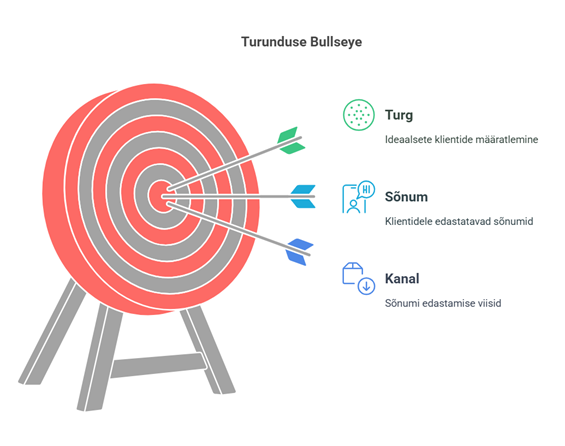
Dollar Shave Club used the “3M” system brilliantly in their marketing campaign, which helped them quickly conquer the market.
✅ Market: Men who were tired of expensive and complicated razor purchasing systems.
✅ Message: “We’ll send you a great razor for just $1 a month.”
✅ Medium: A viral YouTube video that went viral and reached millions of people.
The result? The company grew exponentially and was eventually sold to Unilever for billions.
How can you implement the “3M” system?

If your company is not in the eyes of your customers, they will forget about you. In marketing, the winner is not the one with the best product, but the one who is most visible at the right time and in the right place. When your brand is constantly visible, people develop subconscious trust and are more likely to choose you when they have a purchasing decision to make.
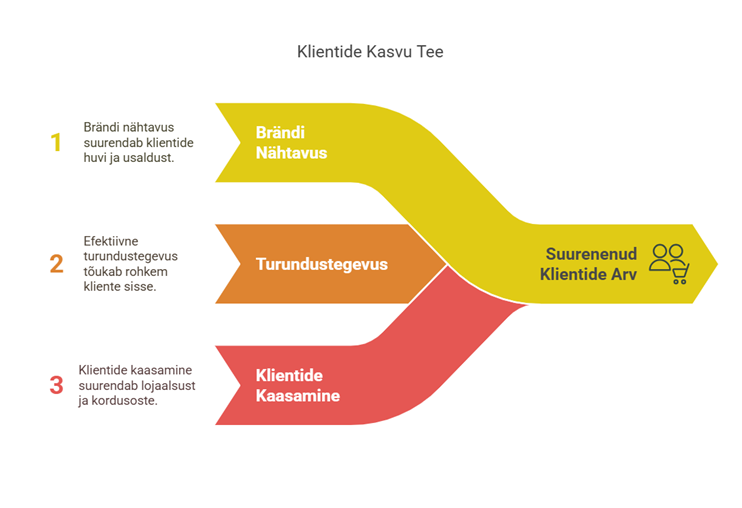
A customer usually doesn't buy on first contact – most people need multiple touch points, before they are ready to buy. If you are consistently visible to them, they are more likely to ultimately choose you:
Have you ever wondered why there are so many shows on TV? absurd and exaggerated advertisements, like those of laundry detergents, junk food, or medicines? They often seem ridiculous or even annoying and may not be in line with your life values and worldview.
And yet… when you go shopping, you’re more likely to choose brands that you’ve seen dozens or hundreds of times. Not necessarily because you love them, but because they they just seem familiar and safe. The result? Brands that are constantly visible sell more, even if they aren't the best or most deeply respected.
How can you increase your visibility?
Most entrepreneurs focus solely on how to get more new customers. But the most successful businesses understand that the biggest profit does not come from the first sale, but from a long-term customer relationship. When your customers buy from you repeatedly, the value and stability of your company increases.
„Real fans are not only your direct source of income, but also your main marketing force among regular fans.”
– Kevin Kelly 1000 True fans
Acquiring a new customer is always more expensive and more complicated than retaining an existing customer. If you focus only on new sales, you will be stuck in an endless cycle of marketing and advertising where you have to constantly spend money to keep your business alive.
Instead, you should focus on:
Amazon realized that long-term customer value is key. Amazon Prime membership ensures that customers don't shop anywhere else because they get free, fast shipping. Customers pay a monthly fee to be part of an exclusive group that creates a psychological bond with the brand. The result? Amazon makes more money in the long run than if they just tried to find new customers every day.
How can you increase your customer lifetime value?
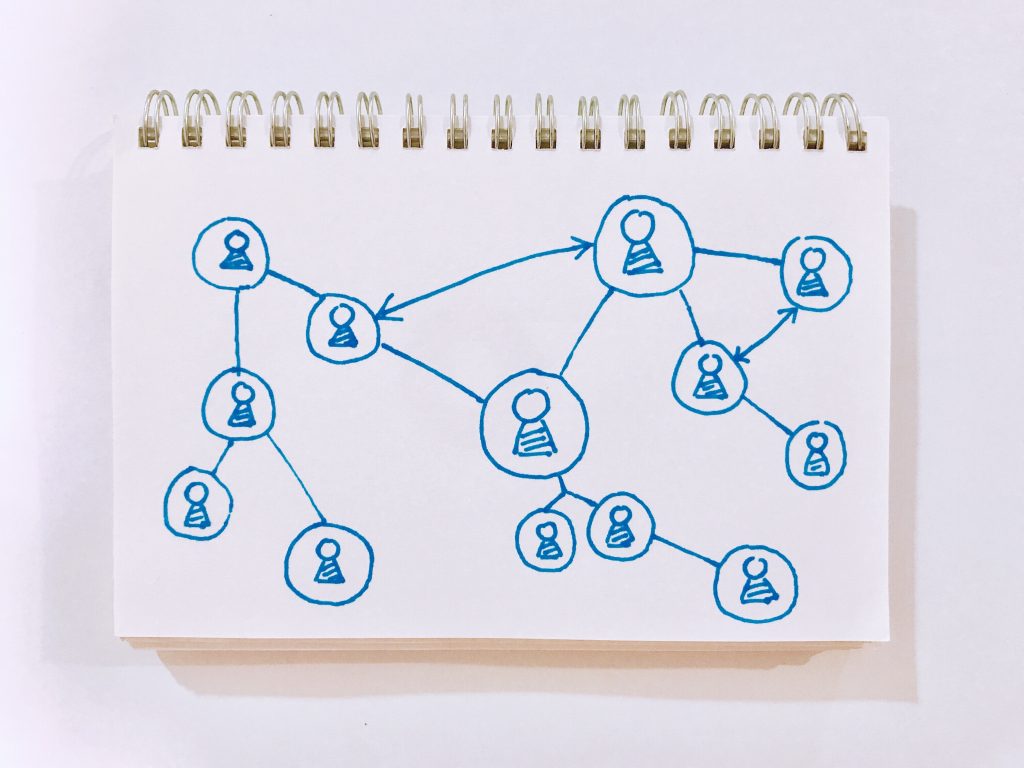
No advertisement is as persuasive as a sincere recommendation from a friend, family member, or colleague. People trust other customers' experiences much more than a brand's own marketing messages. That's why referral marketing is one of the most powerful and cost-effective ways to acquire customers.
“A referred customer typically spends more money, buys more often, is more profitable and more loyal than most other categories of business customers you might target. And referrals are easy to get. Referrals lead to more referrals. They are self-replicating.“
–Jay Abraham
Why is referral marketing so powerful?
Tesla spends virtually no money on traditional advertising – instead, they rely on fans and early adopters who share their experiences on social media. They use referral programs, where customers get bonuses when they recommend Tesla cars to friends. Their innovation and quality also naturally get people talking about them and spreading the brand. The result? Tesla is now one of the world’s most valuable car brands, achieving this without major advertising spend and thanks to strong recommendations and customer experience.
How can you implement referral marketing in your business?
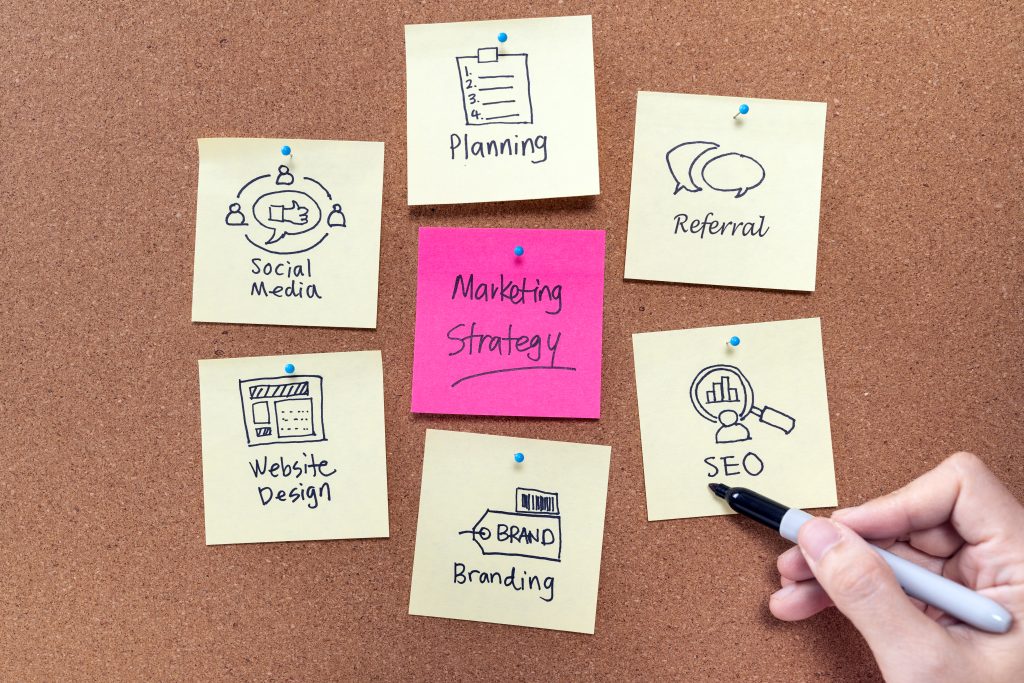
Marketing is not just about buying visibility – it is a strategic system that builds long-term growth and trust. The foundation of successful marketing is implementing the right principles that ensure not only more customers, but also profitability and scalability.
If you are an entrepreneur whose goal is not just to survive, but grow, optimize and finally in your market to dominate, then you know that marketing needs to be structured, measurable, and results-oriented. Simply buying ads is not a strategy – it’s an expense. But properly structured websites, sales funnels, and automated marketing systems will bring you lasting results.
This is exactly what we Impact Media we do. We create systemic solutions for ambitious entrepreneurs, who want to not just participate in the market, but lead it. If your business has the potential to grow, but your marketing and sales funnels are not yet optimized, it's time to take them to the next level.